NXP PF5200 Evaluation Board | Dual-SMPS Power Management Kit
Rapidly prototype and validate dual-SMPS power designs with the KITPF5200FRDMEVM PF5200 Evaluation Board, featuring NXP PF5200 PMIC, USB-GUI control, and programmable 8 A outputs.

Rapidly prototype and validate dual-SMPS power designs with the KITPF5200FRDMEVM PF5200 Evaluation Board, featuring NXP PF5200 PMIC, USB-GUI control, and programmable 8 A outputs.

The PF5200 [KITPF5200FRDMEVM] Power Management evaluation board is a dual-channel SMPS evaluation platform designed to help engineers rapidly test and validate NXP’s PF5200 fail-safe PMIC. Supporting input voltages from 3.3 V to 5.5 V and delivering programmable outputs up to 8 A, this bench-ready kit provides flexible configuration options through USB-GUI control and OTP/Try-Before-Buy programming, making it ideal for rapid prototyping of reliable power systems.
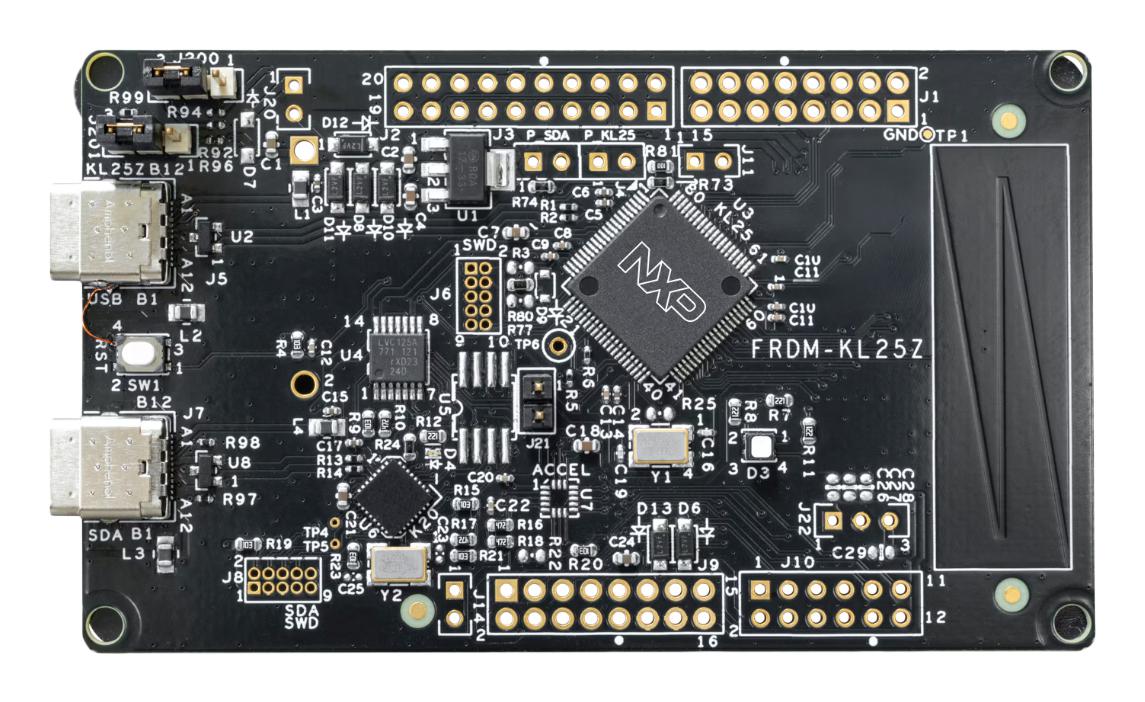
The kit integrates the KITPF5200FRDMEVM evaluation board and an FRDM-KL25Z microcontroller board, which handles communication between the PMIC and the PC GUI. The evaluation board includes a soldered PF5200 PMIC, along with configurable connectors, jumpers, and switches to tailor the test environment to specific design requirements. LEDs and test points provide real-time monitoring of voltage, current, and system performance.
Mounted via Arduino-compatible connectors, the FRDM-KL25Z draws power directly from the PC’s USB port and enables seamless control and configuration of the PF5200 through the GUI. This kit allows engineers to explore all PF5200 features, optimize dual-SMPS performance, and validate advanced power management designs efficiently, accelerating development cycles for embedded, industrial, and IoT applications.
Explore More
Choose this kit to cut prototyping time when evaluating PF5200-based power systems. It combines the real PF5200 device, preflashed FRDM-KL25Z USB to I²C interface, a full GUI with scripting/TBB support, and a bench-ready I/O layout—so you can validate regulator behavior, protections, and OTP-programming flows without building a custom PCB. The kit also documents jumper/default settings and safe start-up steps to reduce bring-up risk. Here's how it differentiates itself from other development kits:-

PF5200 Dual Channel PMIC Top Part

PF5200 Dual Channel PMIC Bottom Part
Published : 26th August 2025